What Are You Rooted In?

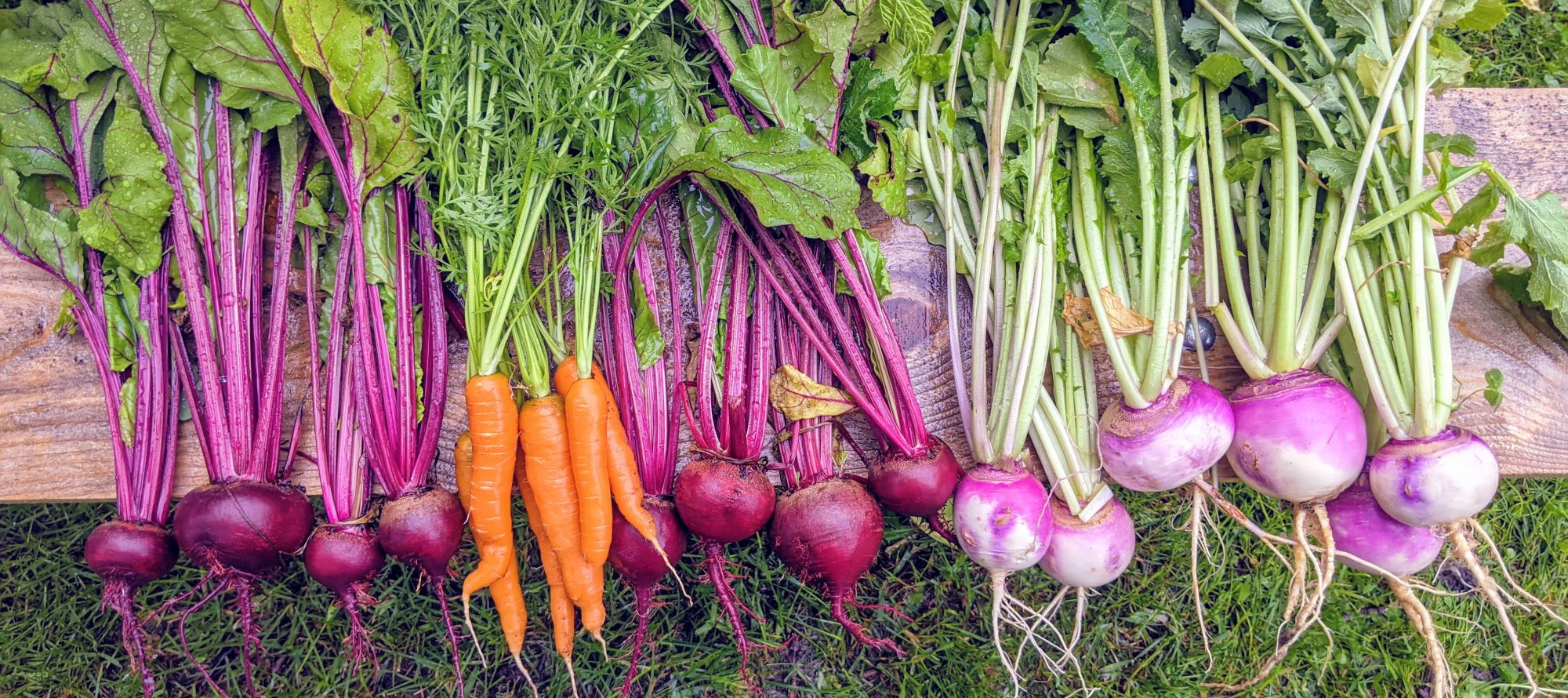
The garden is growing! As usual, year after year some types of vegetable plants do better than others. This year looks to be a great year for cucumbers, first time ever! I think we finally got the growing location, nutrients, and water cycle just right!

In a moment of zeal, I planted too many cucumber seeds in my second planting so I had to thin the plants. I find the process of thinning plants very challenging. I see every plant as its potential, so when I pull a small plant or seedling I see myself taking all of its future fruit with it. But for two reasons, I don’t need so many plants. First, too many cucumbers can be a problem. I only need so many cucumbers for our eating, preserving, and farmstand sales. Second, growing more than I need isn’t doing the soil any favors. It takes plentiful nutrients to grow these plants. Such as having a overly packed calendar schedule (we have 24 hrs in a day) is too much for the human soul, having too many plants in a small space is hard on the fertility of the soil (it only has the ability to carry and provide so many nutrients).

As I pulled the cucumber plants, I set the seedlings in a pile that would end up in the compost. They slipped easily out of the soil but I saw that they still had excellent root systems started. By the time I was done with my project, I went back to gather the first plants I plucked and noticed these plants were already visibly responding to having been pulled from the soil. They were becoming limp. In otherwords, they were losing the signs of being healthy and full of life.

The soil I pulled the cucumber plants from has many elements of nutrition that the plant needs. I fully pulled the plant from the soil, so I took it from the more important thing it needed, the support of the soil which gives it a sturdy foundation to grow in. If I had left it in the soil, it would still grow but it might not be as healthy if it was lacking certain nutrients from the soil. Also, it would not be as healthy if I added too much of a certain type of nutrient. Cucumbers love potassium in the soil, but if I gave it too much, that could be as detrimental to its growth as too little potassium in the soil.

People are like this too. We have the core thing we’re rooted in. We also have various nutrients we need to feed our souls. And, what we need to grow is different for each human (such as it is for plants too!). If a person is pulled from what they are primarily rooted in, they will begin to wither. Or, if certain nutrients are removed or given too much of, a person will survive, but not thrive in this scenario.

Life in balance is an ongoing personal project for me and is always changing because of my environment. Summertime, for example, has a lot more dosing of my necessary nutrient of community. In summer I get more of that, but adjust elsewhere to make room for it. Just as the cucumbers may find perfect balance, then suddenly there is a cold snap, they may struggle. But, if they are in healthy balance in the first place, the cold snap will be less impactful on them.

What are you rooted in? Family? Community? Faith? Adventure? Learning? Teaching? Nature? Or….what else? Which one is your SOIL? Which ones are your NUTRIENTS?

Peace, Love and Nature,

-L

P.S. If you’ve been on long-time blog reader, you know I absolutely love learning from nature. I enjoy being part of it and I’ve learned that its a major nutrient I need for my soul to grow. Nature teaches me so much. And, in return I love to teach about nature. Last year I held Foraging Adventure for Beginners at White Sky Woods. This year I’m partnering with The Keweenaw Land Trust (KLT) and bringing Foraging Advernture for Beginners to KLT’s Steve Farm Nature Area. We’ll explore, identify, sketch and experience what wild plant foraging the Keweenaw region has to offer. Get all the details here!
Junk, Piles, and a Tar Bucket Filled with Wasps

Old homesteads have junk. Here in the Upper Peninsula of Michigan and I imagine most other places too. It’s just a fact that comes with places that existed before routine garbage pick up and/or living rural. 80+ year old car frame? We have that! Barbed wire in the most unsuspecting places. Got that too. Piles of empty wine bottles stashed in the woods? Of course we have that. (It’s rumored a very long ago former resident was quite the wino.) Some cool things too, like old horse drawn farming implements of all kinds (and even many of the same kind). When you purchase an old homestead, most likely you also purchased a lot of junk. The next step after purchase should be getting a tetanus shot.

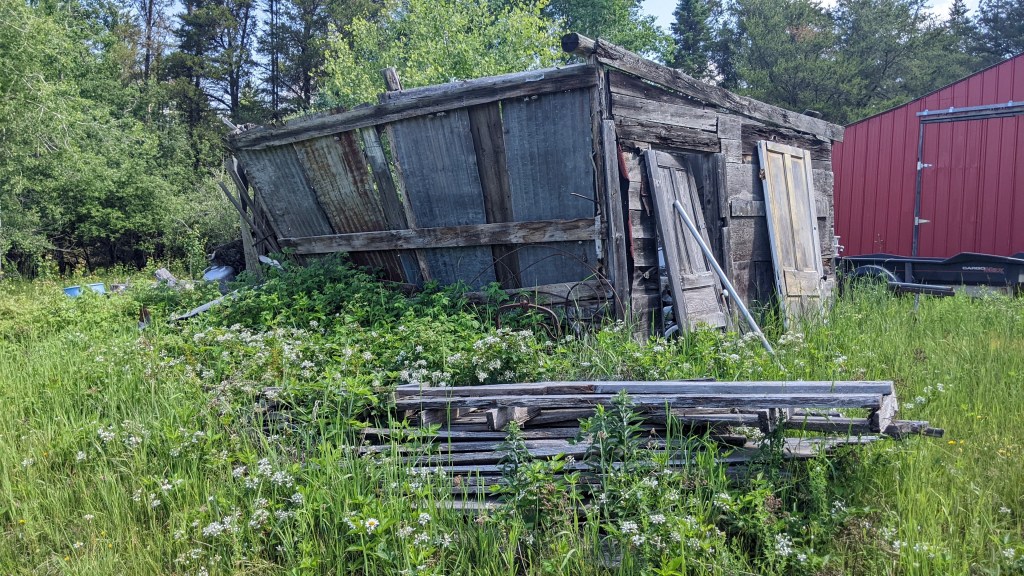
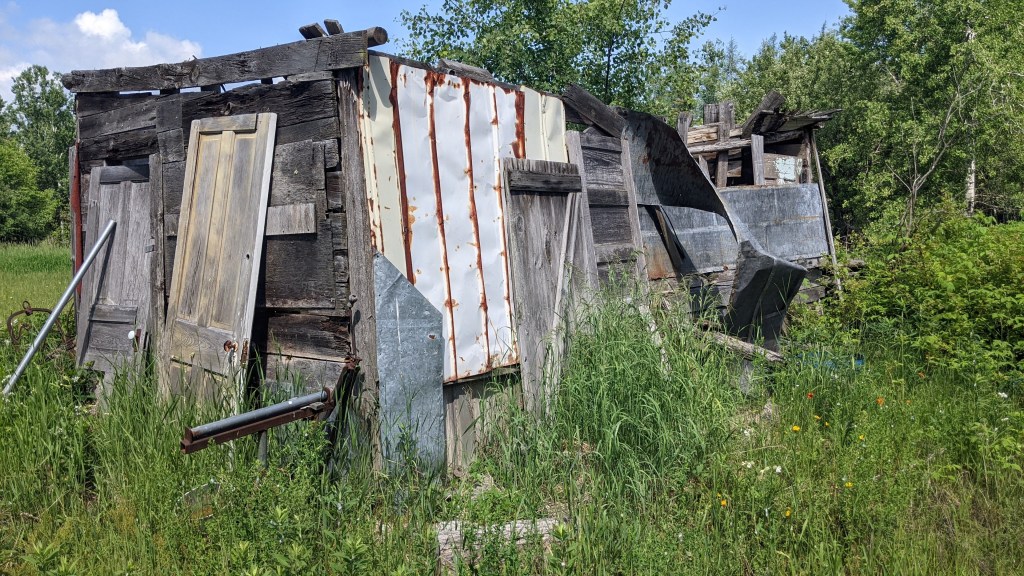
Slowly we’ve been doing clean up here and there, but there has been a lingering project. The Shed. We originally planned to raze the collapsed structure prior to opening the vacation rental cabin, but time didn’t allow. We cleaned up around it an went on our merry way. But it remained on the list of things to do. We needed to wait until good weather and when we had enough time at the cabin with no guests so we could work in that area without impacting someone’s restful stay. Also, in honesty, we also experienced some procrastination due to project dread.

Well, the opportunity presented itself. We had a guest cancellation and we decided to block off the calendar to just get it done. Of course it happened to be 4th of July extended weekend and it happened to be really hot.

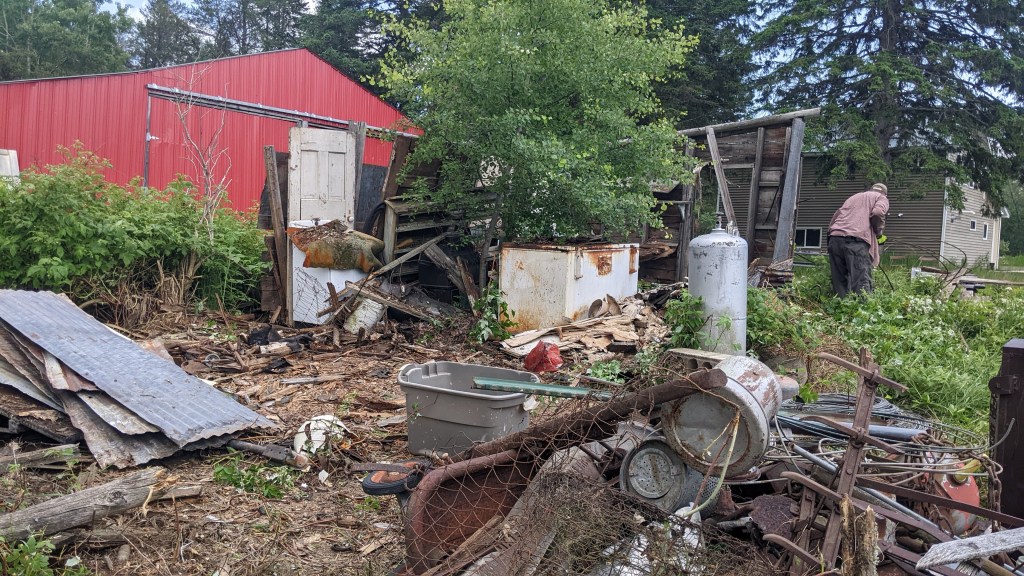
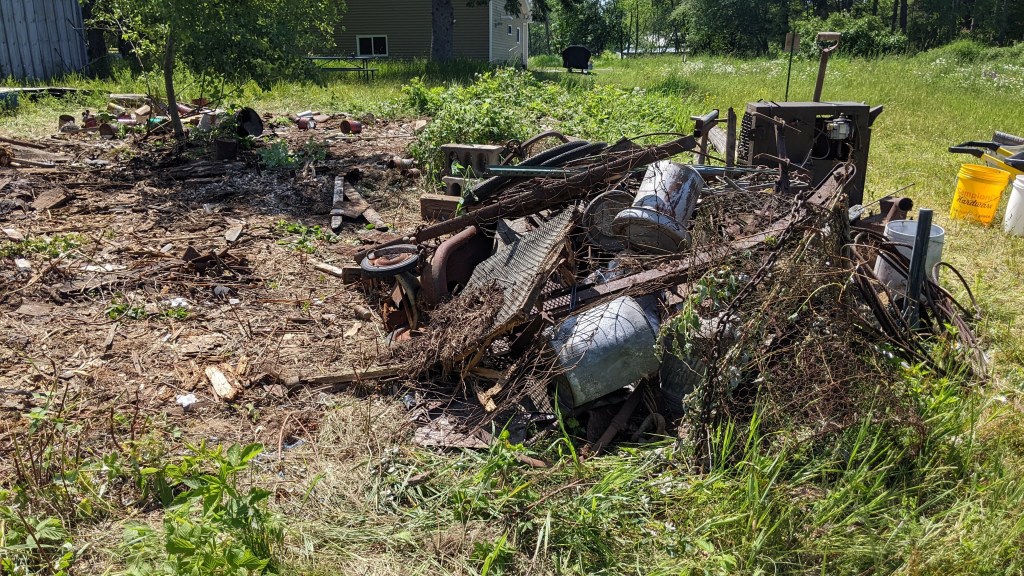
I’m not going to sugar coat it, The Shed project sucked. Hot weather, sweltering sun with no shade, battling allergies, mosquitoes, black flies (OMG the black flies!!), sweat in the eyes, moving metal, garbage, wood and avoiding endless rusty nails – it was pretty much the worst project we have ever done. Even mentally it was challenging because I couldn’t help but thinking about how I ended up responsible for cleaning up someone else’s junk. It’s like always getting stuck doing your co-workers dishes in the kitchen at the office, x10,000. We found some interesting things in the shed but since the shed’s roof collapsed at least 20 years ago, we mostly found rusty useless things. And, a bucket of tar with a lot of live yellow jackets inside.

But, while it was a multi day, physically and mentally challenging project, I’m so proud of our family. We did it together and we all did it to the best of our abilities. And, the upside of the whole project…it’s done!

All said and done we hauled out over 2 TONS of garbage! Several trailer loads of scrap and several trailer loads of garbage. While working on the project, it really had me thinking about our own footprint on the land. Are we holding onto things that will be someone else’s problem in the future? Or maybe more proactively, do we have things we don’t need or don’t use and could do without in the first place? Also, clean up your own mess so someone else doesn’t have to!!! (Apologies…having a Mom Moment here.)

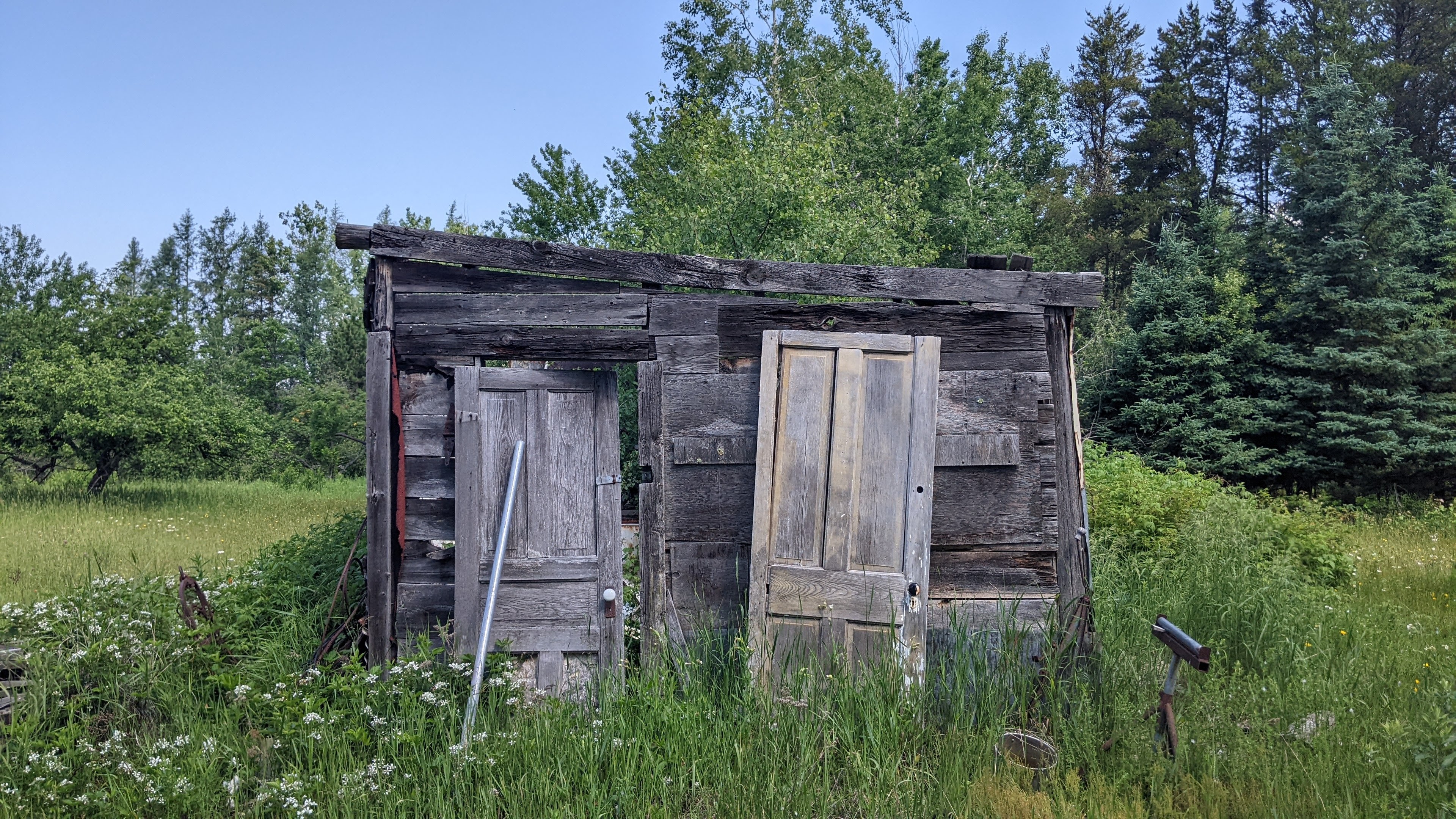
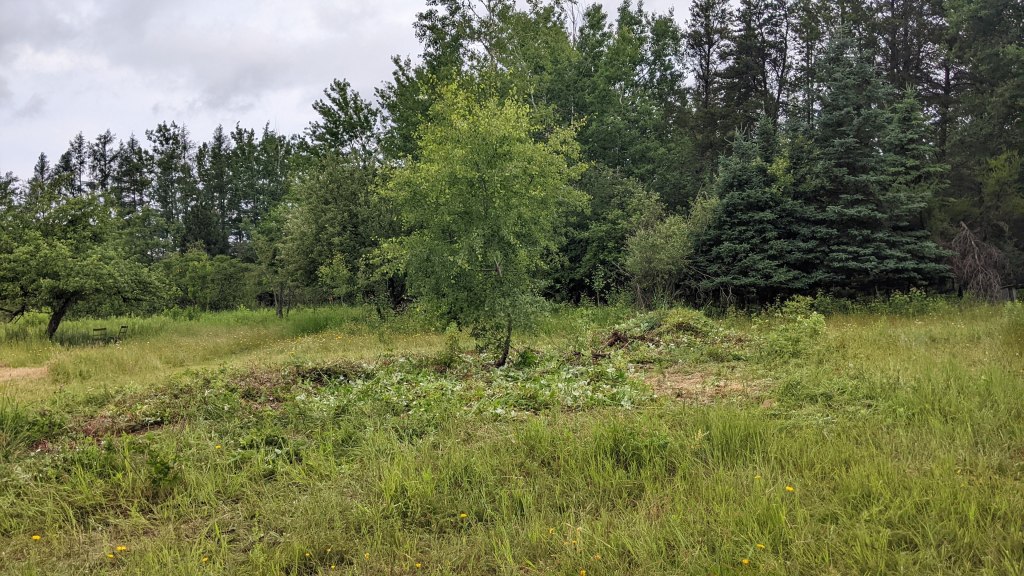
Here’s our before and after photos.

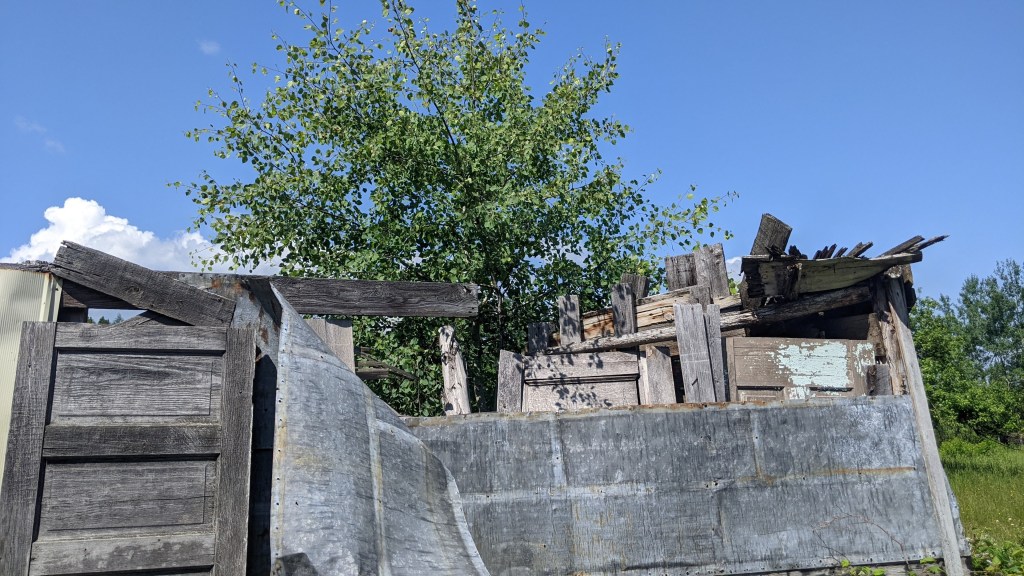
BEFORE. Note aspen tree growing up through the center, about to be set free.
….and AFTER! We will be collecting wildflower seeds through summer to spread here, but in the meantime we cut down brambles that were growing next to the shed and we spread them over the exposed ground to cover it.

Here’s a little photo gallery:

Even with all the efforts of The Shed project, The Fourth of July weekend wasn’t all work. We had an amazing community event on the 4th, our annual parade (it was actually 2 minutes long this year!…that’s double last year) and our social gathering and potluck. What a gem of a community we live in. Small, welcoming and wonderful…much unlike The Shed (ha!).

-L

Long Winter: Finding a Spark While Working Outdoors

It’s been a while since I’ve written. Before homesteading, in my career part of my role was creating and directing digital content plans for clients. But, for my own blog I vowed I would only write when the feeling and idea grabbed me. Yeah, I know, if I published more content I could improve my website SEO, blah blah blah. But that’s not what life is about for me anymore. I’m a-okay with a quality over quantity approach (doesn’t this apply to so many things?!). Plus, writing is often a means of me generating ideas and understanding myself. I’m glad to have people who happen to be reading during this process – so, I’m very grateful for YOU.

Let’s just get honest about why I haven’t written for months – this winter has been hard. Not the physical hard (especially since it has been a more mild snow total this winter), but the crummy winter mental wellness kind of hard. It makes me a bit uncomfortable writing that here, but I know by sharing this I’m doing a little part in stopping the stigma of talking about mental health. I wouldn’t try to hide a broken arm, so why should I try to hide the fact that this winter seasonal depression really grabbed ahold of me? Especially since I know when I talk about it, many people share that they have experienced the same. Being a homesteader, we definitely see winter as a time for rest, which is essential. This winter I rested a lot, which actually supported the healing my physical body needed (woot!). But, there were some added pressures in the home starting this January, and by early February I could feel that my mind was just not functioning wholly.

Here on the Keweenaw our winter solstice (shortest daylight time of the year) is approximately 8 1/2 hours of daylight. Compare that to our summer solstice with 16 hours of daylight…yup, winter is long and dark and drastically different than our summer. Being aware of this I have been doing everything I usually do to help with our extra long winters here: Vitamin D supplements, continued daily meditation, daily indoor and outdoor exercise, drinking lot of water, long vacation in sunny places, short getaways with friends, and using my special “happy lamp” during the dark mornings. It is a fairly comprehensive list, so why have I been feeling the effects of seasonal depression more this winter? I have no idea. The good news is I have slowly been sensing it escaping me as the days get longer, but it’s still here, just presenting in a more mild way. I’m glad to be out of the days where I could just sleep forever, or when I couldn’t even find the focus to read a good book, watch a program or scroll a feed. If you’ve made acquaintances with depression, you know, depression typically isn’t just a feeling, it affects how you function to the core of your being.

Today though, with the late winter temps warming, we had a winter project that still needed to be done – clearing trees that have fallen into our ponds. From this winter and the past few years, trees at the edge of the pond have taken the tumble. Getting out on the water to remove them is only possible when the pond is frozen. This is our first winter with our Taiga Dog machine, which is an all-season utility machine for us. In winter Tim uses it for grooming our private 3-mile trail system for family and our vacation rental guests, and for times like this when we need to haul heavy materials (such as chainsaw, timber, etc.) back and forth around White Sky Woods. We have 240 acres so this machine is a great asset to us!

This is a photo of a Taiga Dog machine parked in the center of a large open snowy area.
Taiga Dog parked on the center of the Amikwag Pond.

If you are familiar with this machine, the operator stands behind the machine in the sled. The materials being hauled (including me today), ride in the additional sled. It goes over deep snow and can be used in all seasons on all types of terrain. We haven’t had it for quite a year, but it has been so handy! Check out this short video to see.

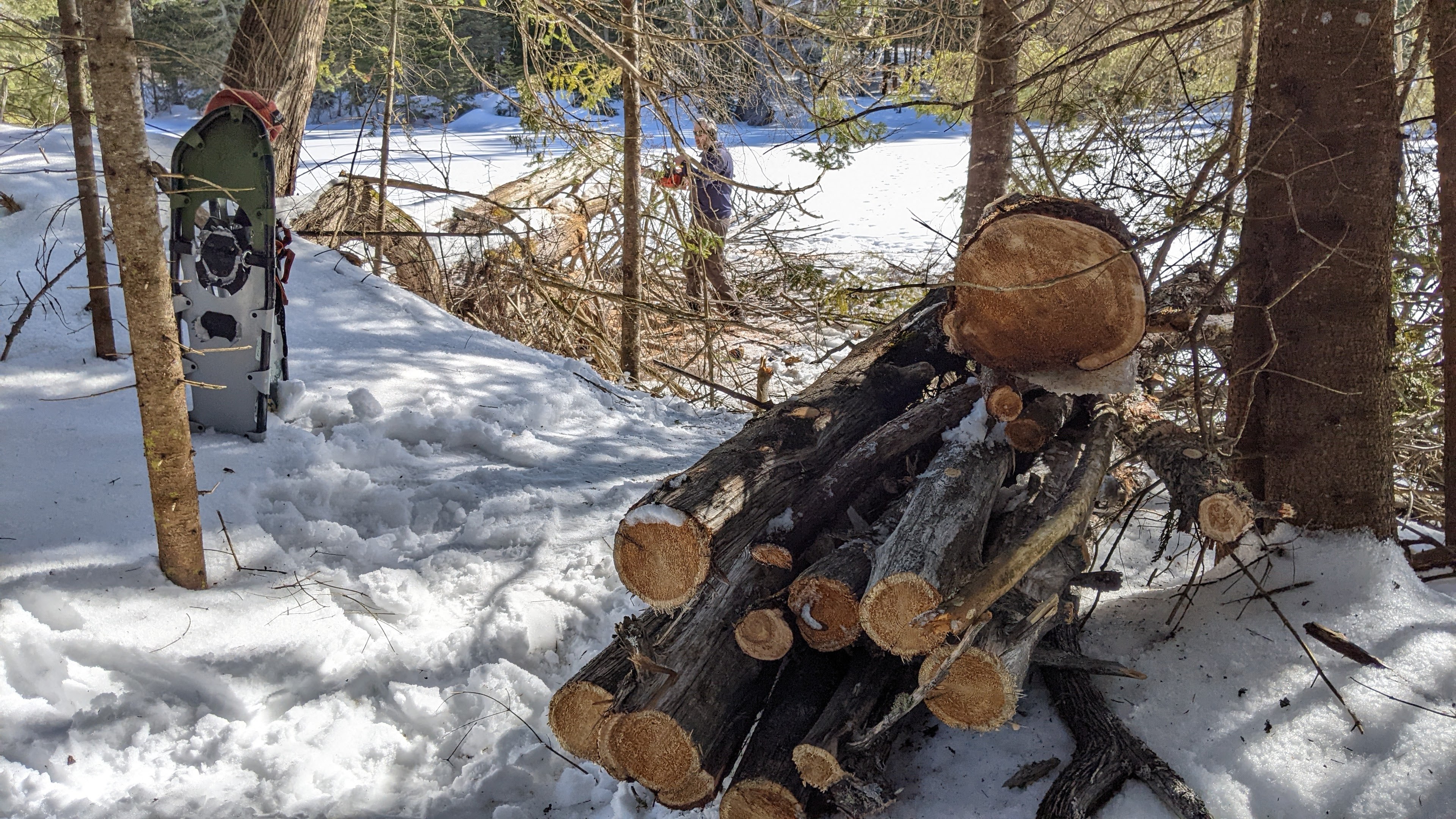
For the project we had two ponds to visit, one with light work and the other with heavier work. Tim took care of the first downed tree on his own. It was a tall, skinny, lightweight fir tree. It just needed to be cut up and pulled aside to be off the pond and out of view from our favorite sunset spot. The animals will have a chance to finish browsing it and then it will eventually turn back to the land. Then, we headed back to the second pond. This was going to be a bigger project. The tree has been downed for several years and was a very tall and wide cedar. Tim chain-sawed, I hauled branches and large pieces of the trunk off the frozen pond onto land, stacking what we can use to split for kindling (cedar is so good at this) and the rest was laid aside to eventually decompose back to the land.

Short of shoveling, snowblowing, and hauling wood into the yurt, my outside work this winter has been limited. As we were working, I felt my senses light up. Stewarding the land is a big part of our homestead experience, and it was so very nice to be doing just that and best, as a team. The sun was shining, the temp was rising into the 30’s and when the chainsaw wasn’t running, it was completely soundless except for a few chickadees (whose song seems to be switching to “Hey Sweetie” – spring must be near!).

While I am normally out on the trails for a snowshoe, having a specific purpose to today’s outdoor time sparked me. I work outdoors all summer long and then in winter my projects generally turn to inside work. Working in the woods, in the snow, and by the water – it just lit me up inside. Also, this particular location at White Sky Woods feels to me to be a space for healing. The land is recovering here, where it was quarried for sandstone 120 years ago. Today, I feel I “recovered” a touch more. I just needed that internal flame for purpose in the outdoors to be fanned.

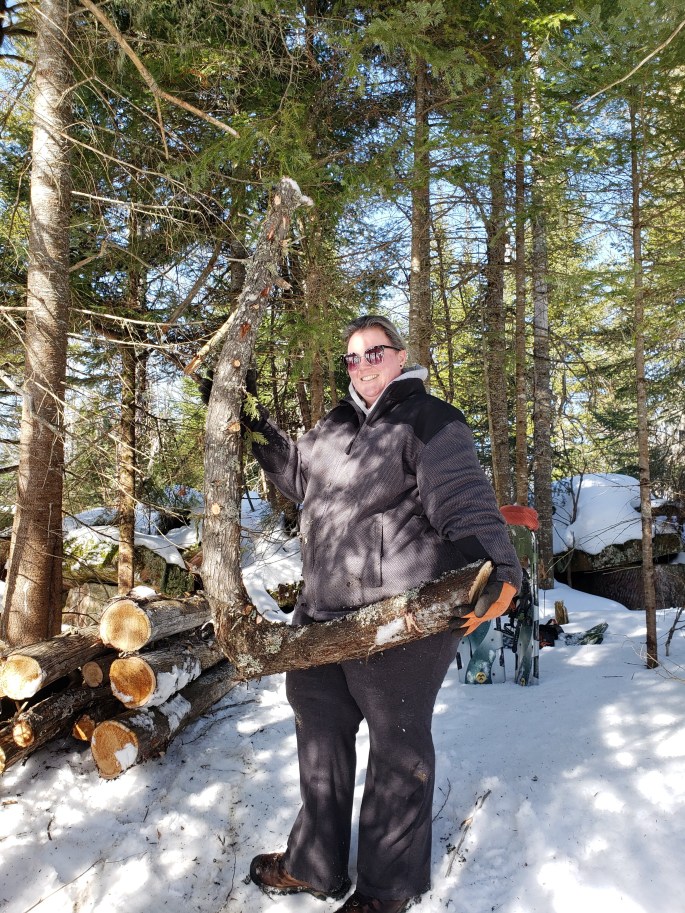
The project even provided me with a limb shaped like my initial – “L”. Hadn’t seen that before!

What’s left for this winter and in the upcoming winters, this will need to be a coping method I add to my “go happily through the long winter” list.

What are some things you do to help stay well in the winter months? Please share, I would love to hear from you.

Wishing you peace, love and nature,

-L

Because this post includes the topic of mental wellness, I feel compelled to share this resource. If you don’t know who to talk to and are having a mental health crisis, dial 988 or visit Suicide and Crisis Hotline. Your life matters. ❤️

Less is ahead of us (and it’s a good thing).

This last summer we celebrated our 5th anniversary here at the homestead. Time is such an unusual thing. 5 years sounds like almost nothing in the span of life, yet, for me it feels like I’ve been here for the bulk of my life. I’ve tried to dissect this strange phenomenon, and the best description I can come up with is that our lives are a bunch of chapters that make up a book. Each chapter is significant to the story, but the current chapter is the one I’m most invested in because it leads to what’s next….and therefore it feels like it is the most relevant. I’m not the type of person who looks back to the past wishing for the “best years” back. I mostly find my focus on the here and now, but I can also get wrapped up into what comes next because I love a good plan, ha! And without a plan, we probably wouldn’t be here celebrating 5 years at White Sky Woods.

If you’re new to our story, the quick-ish background goes like this. Almost 14 years ago Tim and I purchased 80 acres on the Keweenaw Peninsula. We had a dream of having a place we could call home, a place where we could live differently than the typical path expected of people in their late 20’s (which we were at the time). We didn’t know exactly what that looked like, but even being fairly new to career life, we knew we didn’t want to spend the next 40 years participating in a rat race of earning, spending, keeping up, and being stressed out during it all. We weren’t depressed, or lacking, or having a bad time by any means, we just knew something different was meant for us – something outside the box.

Through the course of the next years, we had 2 kids, significant job role changes, and purchased our beloved White Sky Woods Homestead. For several years we traveled here, turning our raw land into a homestead, building everything ourselves and keeping an eye on the future use of it and how we’d move someday. Eventually we made that move in 2017! We have been living with the land, homesteading, homeschooling, getting involved in our community and and starting a business for ourselves with our produce sales and year-round cozy cabin rental for people who just want to get away from it all and soak up the peace of nature we came here for.

That’s the short story. As you can imagine, it was a lot of doing.all.the.things over this period of time. Most of it was the doing of building the infrastructure we need to sustain a successful homestead – such as building the high tunnel, renovating the cabin, fences, fences, more fences. And then recognizing better things/systems – so moving, changing, and building better options. Also, maintaining the general work with gardening, putting up food, keeping up with our trail system, and the process of making our own wood. Add in family, community involvement and part-time employment at home. This all, however, is an amount of forward drive and doing that cannot be sustained. We came here to provide for ourselves, but, we also came here to direct our own lives, relish in our beautiful space, and be connected as a family who isn’t at the mercy of extreme scheduling and overwork.

Now, we have in place what we know we need and can sustain. There are no major projects lingering ahead of us – what a relief!! After having been in the process of building up the homestead, growing infrastructure and adjusting our systems since 2009, it’s time to settle in to what is. Excluding when we decided to take action on this “dream” back in 2009, I have never had such a clear feeling about what’s next. That feeling is what the title of this blog is: LESS.

What does LESS look like? I’m not sure, but I do know it will take some learning! Being a driven and perfectionist personality doesn’t make LESS easy, but if I can do more well, I know I have the ability to do the same with LESS. 🙂 LESS may not even look as such from the outsiders perspective, as we’ll still be over here managing the homestead and business. These are definitely work, but they are fulfilling and rewarding work. What will be missing is the cramming in the big projects in every moment of downtime. And, there are some ways we are improving systems for the regular work, including the plan to put a small portion of the outdoor garden into a green manure crop this year, instead of growing the entire space. It also means continuing with a manageable flock size and not raising any new animals. I see this new space of LESS that will be available as being our place of rest, where we use it as just that or use it as an opening for creativity learning and fun. I guess that’s where the term “less is more” comes from. When we create new space for flexibility, more of what we love will flow on in. Having this bit of extra space gives more fluidity and empowers us to make smart choices on how to use this time. Less will of course lead to more, but it will be the things that fill us up rather than wear us down.

What I have learned in the last two years is that I need a forced break to make the shift to LESS in my life. November in the Keweenaw has arrived, which is as forced of a break as any! The garden is done for the year. The woodpile is stocked. We have a great routine with homeschool. My faculty semester is over. The scene is set for LESS. Just at the very start of it I’ve had more time for creativity, friends, wanderings, and even writing this blog. 🙂

Not all people are interested in this kind of less I just described. And having less can carry such a negative connotation. But less can be good in the many aspects of our lives. Less stuff. Less people-pleasing. Less negative thoughts. Less judgement. Less busyness.

Is there something you want less of? If you remove it from your life, what kinds of more will be let in?

Sometimes we need to put more in (personal growth, income earning, etc.) to get us to less. But in my experience, with a vision and a plan for it, we can get where we need to be. While we all have different paths in life, my wish is that we all give ourselves grace on that path of finding what is meant for us, and that the focus isn’t always on having the more that leads to burnout.

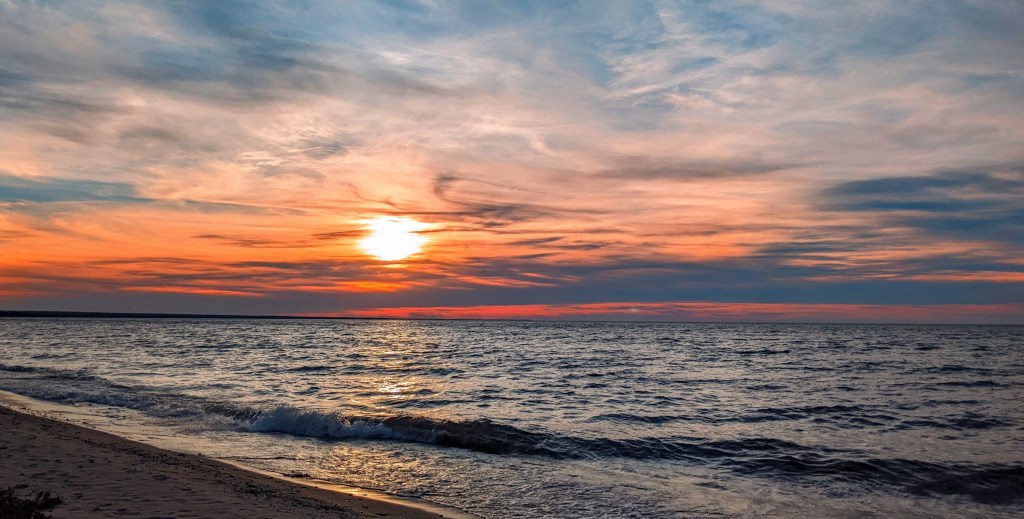
A thing I will definitely take more of? Watching sunsets.

Agate Beach, November 2022 – Keweenaw Peninsula

The Challenge of Predation

This was a rough week on the homestead. In just 7 days time we lost 3 duck hens and our rabbit – they were all killed by a predator. A few months ago we lost 5 chickens in one night. In summer, we were raising 6 chicks in a secure pen, only to go check on them and find them either missing or beheaded. To a large homestead or farm operation this might seems like nothing. But 3 ducks was almost half of our duck hen flock, 5 chickens was half of our chickens, 6 chicks was our succession of youth for the following year and our rabbit was more like a pet (he was our buck when we were raising meat rabbits, but we stopped meat rabbits and kept him because he was so sweet). Raising all kinds of animals is a long-term commitment, with poultry it takes time for them to be productive layers so unless you replace them with adults, you can’t just make up your egg production instantly. When they are gone, so is a period of time of egg production. Replacing them with adults is an option, but it comes with its own risks like disease or lack of acceptance from the tenured flock.

A common question we have living on a homestead that is fairly remote (no surrounding “farms” or neighbors) is – do you have problems with predators? Yes, we do. Then, what predators do you have? Coyote, fox? Well, we have almost every predator you could imagine in the Northwoods, but the one that actually causes us 95% of our problems – the short-tailed weasel. In winter its coat turns white and is referred to as an ermine. Some also call it a stoat. I have some other choice names for it, ha! It’s really cute, and really deadly. What a weasel usually preys on is mice, voles, shrews, frogs, eggs (we’ve also had problems with it robbing our eggs – we’ve found huge stashes outside the poultry pen), bugs and other small critters. Also apparently any type of poultry, no matter the size. The worst part of this little predator is that they just kill, enjoy some blood, and then leave the entire carcass. It seems like such a waste. The additional 5% of our predation problem comes from the sky (hawks, owls).

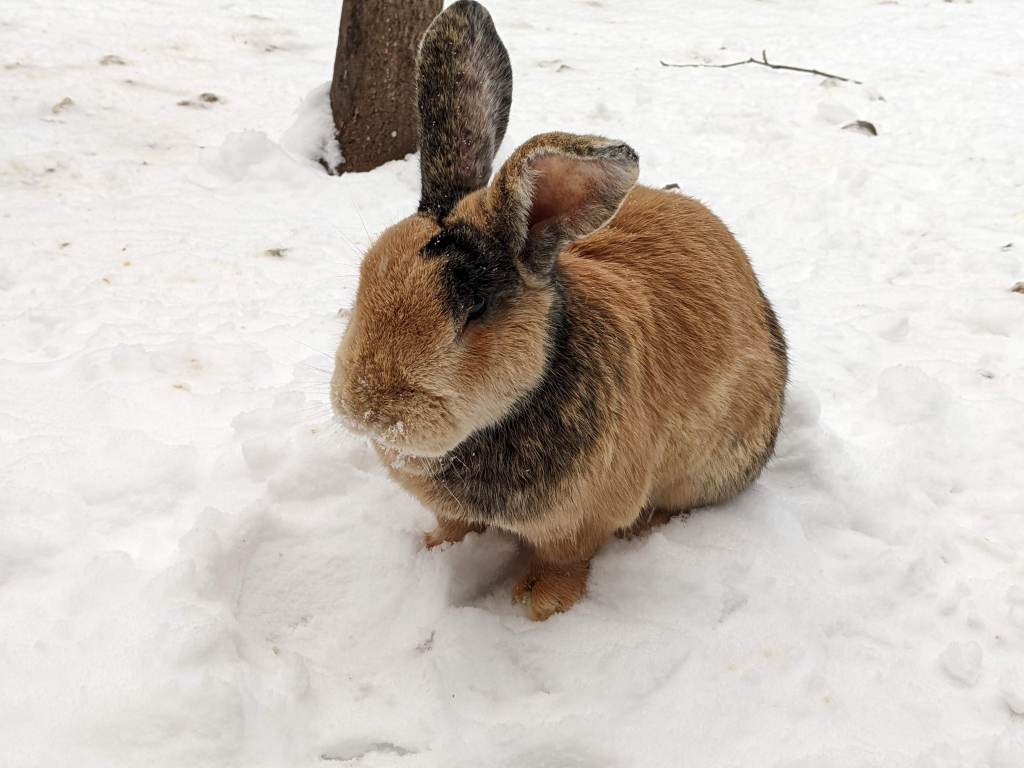
Goodbye Sweet Tracker. Loved by all, he was the biggest and best bunny.

When dealing with predators that can climb anything and sneak though any little space, it takes a lot of effort. It is one of the most frustrating aspects of homesteading for me, because I feel like we are always a few steps behind this murderous little beast. A year or so ago we’ve fenced in all our poultry to limit predation (they were free range). Then after the ermine went on a serial killing spree of 5 chickens in one night, Tim reinforced the chicken coup (which thankfully we haven’t had any chicken loss since). Now with the ducks being killed, Tim spent a bunch of time this week creating for them an “ermine proof” nighttime pen. Thankfully he’s been able to build this using supplies we had on hand – he’s so inventive and handy. Part of this new pen is that they (our ducks and geese) need to create a new habit of going in the pen at night so we can close them in until morning. The first night we had to encourage them in. The second night and every night after so far they have gone in on their own! Their intelligent behavior made me feel like a proud mother, ha!

I hope these new efforts slow down or stop the predation we have been experiencing. Seeing half your flock that you’ve raised, fed, and cared for die in an instant is a serious let-down. In reflection, a few ideas float in my mind.

1.) I still LOVE nature. We are part of nature (not separate of it) and that means we are often at the mercy of it. I can’t control the weather, but I can be prepared for it. As such, I can’t control the ermines natural behavior, but I can be prepared for it (better shelter, etc.)

2.) Homesteading is not glamorous. If you follow homesteaders on social media and are enamored with their lifestyle, then they probably are only showing you the “romantic” side of homesteading. There are so many amazing things about homesteading lifestyle, but like anything in life, there are plenty of bummer things too.

3.) I choose to enjoy the flow of my life, and not just the outcome. No, I don’t enjoy the dead ducks, but I do love life and this is a part of life. There will never be perfection along the way. There will be ups and downs. And, when it’s not going well, I’m learning.

Moving into a new week, we hope that the new duck/goose shelter that Tim built will be keeping them safe. Also, we are left thinking about how to make up for the loss of our 3 duck hens. On the upside, garden planning has been started and some new seeds have arrived in the mail! There is always something going on here at the homestead, good or bad, I accept it and keep moving right along.

Peace,

-L

It’s Winter and the Beet Goes On.

Today I happily welcome Winter Solstice. I love love love this day. The darkest day of the year – where here in the Keweenaw there are 9 hours and 45 minutes of daylight between the official sunrise and sunset times. Why so happy on such a dark day? Because it’s only going to get lighter from here folks (well, at least till summer solstice)! Yes, we have a lot of winter months left here in the north, but with all this darkness and snow it’s a great time to unwind and reflect, relax and renew. As a family who lives in tune with the earth and seasonality, we have annual Winter solstice traditions. I also like to take time for myself around solstice to look at the dark and the light in the past year, and project into the future my hopes for the upcoming year.

As a Winter solstice tradition, our family plans a book exchange between the 4 of us (what better to do in winter than read?!); we also go on a winter hike. A weather system is moving in with more snow today, so the hike should be filled with snowy wonder! This year I’m adding in a new tradition – HARVEST! It was our first year doing a winter planting in our high tunnel and now it’s time to harvest the beets and carrots. On a cold winter day, what a joy it will be to wash off the soil from our fresh vegetables and prepare them as a family. We’ll roast the carrots and beets with potatoes and herbs we harvested in autumn and enjoy a hearty dinner.

This picture is from a few winter’s ago, but it’s one of my favorite.

There is plenty to reflect upon this year. This past summer we celebrated our 4th anniversary here – it’s really important to us to celebrate the major life change we made, where we went from a typical town-dwelling working family to a yurt living, homesteading family in the Northwoods. Every year we celebrate making this soul-filling change in our lives.

2021 was our first full year with the high tunnel for growing produce. This means we started planting earlier than ever before with seeds going into the ground on March 7th, almost 3 months before much of the outdoor garden. And, in early August a small winter crop was planted. It takes a lot more effort to manage all the garden space for longer periods of time, but the rewards are immeasurable!

Also in 2021 we opened our AirBNB farmstay and had the most amazing response. It was a great way to generate more income for our family business, but more importantly enrich our lives (and hopefully the lives of our guests too). We met so many amazing people, and for those that took the 30-minute farm tour – we we able to share our story and experiences with them and connect them to how food (plants and animals) is grown in sustainable ways.

Our farmstand went on into its second summer and we expanded the types of produce for sale along with having more produce early in the season. The farmstand has connected us to our own community members, and beyond! Plus, my heart is full knowing our farmstand guests are eating nutrient dense, uber-local, organic produce and homemade foods in their own homes.

A challenge of 2021, as usual, is time. I am still learning the balance of work and play (usually losing play to work), and coming to terms with the fact that for homesteaders, summer is more work and less play and it’s okay, as long as I keep tabs on a suitable balance within that.

Another challenge of 2021 was that at the start of summer I started experiencing some discomfort in my leg, ankle and foot. Because I tend to downplay my own need for care, I ignored doing something about it. It became the source of chronic and debilitating pain over the course of the summer and I finally got myself into the doctor who ruled out any major problems and sent me to physical therapy (PT). My mobility has been coming back over the last few months of PT and I have high hopes this lesson sticks: ‘Care for yourself, damnit Lisa!’ I’ve been slowly learning this lesson over the years, but this may have been the most concrete evidence for it yet. And, I’m learning more about why I do this, which is also part of the solution.

Just like any 24-hour day, there are periods of light and dark in our lives. Both are always guaranteed. The question is, what will you make of it? Do you choose dark or light?

Happy Winter Solstice, Friends! May your upcoming days be filled with more light than dark and may you have many things to be grateful for. Thank you for joining us on our journey!

Stop and Smell the Roses

At the end of last year I set a mantra: live a slow, simple, and intentional life – unabashedly. I knew this wouldn’t be an immediate switch from what was happening (busy, overworked, disconnected) but I’m a believer that if you set an intention, the more you focus on it being true, it will happen. I knew that living this mantra wouldn’t just be an easy thing. I see clearly the type of person I am when it comes to keeping busy, and I knew that it would even take work to unlearn allowing my busyness to provide self-worth. It’s the journey, not the destination, right? Well, even though I had removed certain things from my responsibilities (outside of the home things) this summer proved to give more reasons to stay busy, like the following two:

-the AirBNB cabin is/was solidly booked all summer! This was the most amazing and abundant thing that happened all year, far surpassing our expectations! It did create more busyness, but it has been soul feeding. You wouldn’t even believe the level of awesome so many of our guests are!

-we expanded the garden in variety and size. The goal with this is to offer more variety and quantity to our loyal farm stand customers, along with the fun of trying new things, broadening our food preserving for winter, and getting more varied healthy foods in-season. It’s going well, and like always I’m taking notes in what to try different for next year. It’s really always an experiment of sorts 🙂

So yeah, there will always be a “next thing” (disclaimer: especially when you have kids). Commitments (fun ones yes!, but still something add to a schedule), things to do, things to go to, people to see. These all bring so much joy, but sometimes they bring rushing too. Sometimes they bring longing for quiet time at home. Will I ever be the type to just uncommit or be “lazy”, or have no purpose…. Nope. It’s just not possible, that’s not me. But I am finding ways to bring slow, simple, and intentional into my daily life. I have found that it’s small things, every day, that ground me. For instance, everyday I start with making coffee, enjoying a cup and then at least 10 minutes of meditation. I do nothing else before this, especially no phone checking. That way I come to myself, first thing each day, with a clear mind. It sets my tone for the day.

Another thing I have found helpful is to break up my work. It wasn’t an idea that came to me on my own, my body pretty well forced it upon me. I have been having a hard time with an ankle injury, and doing hours of work on it just worsens the damage, so much that by the end of the day I was immobile and in lots of pain. So, I break my work up now into shorter chunks of time. It’s amazing how different it feels when it comes to achievement. Instead of coming out of the garden exhausted and cranky from hours in the heat and sun, I come out thinking “I harvested all that in 45 minutes?!” I hope to keep this new habit going even after my ankle is healed.

Oh, and in between those short bursts of work? I rest. Sometimes I sit down. I. Actually. Sit! Sometimes I even lay in my hammock, in fact that’s what doing right now, while I’m writing this.

You know what else I do? I talk to myself. Yup. I think so many of us need to hear some form of this about ourselves: You are enough. And hearing something like this from ourselves, the most important person to hear it from: “I am enough. There is nothing I need to do to prove myself, but just be me.” In fact, none of us have to prove anything at all, it’s just that faulty programming inside us that says so.

I am part of an amazing community. A small local community. A broader food community. A community of friends and family. I see so many wonderful people around me wearing out over self-imposed circumstances (even if sometimes it’s unclear and we want to place blame on others for this, like a boss for example). I don’t think we need to do this, friends. Let’s be good to ourselves and take just a little bit of time each day to do something that brings a smile to our face, slows our heart rate or raises gratitude awareness. Here’s a few things we’ve done on the homestead:

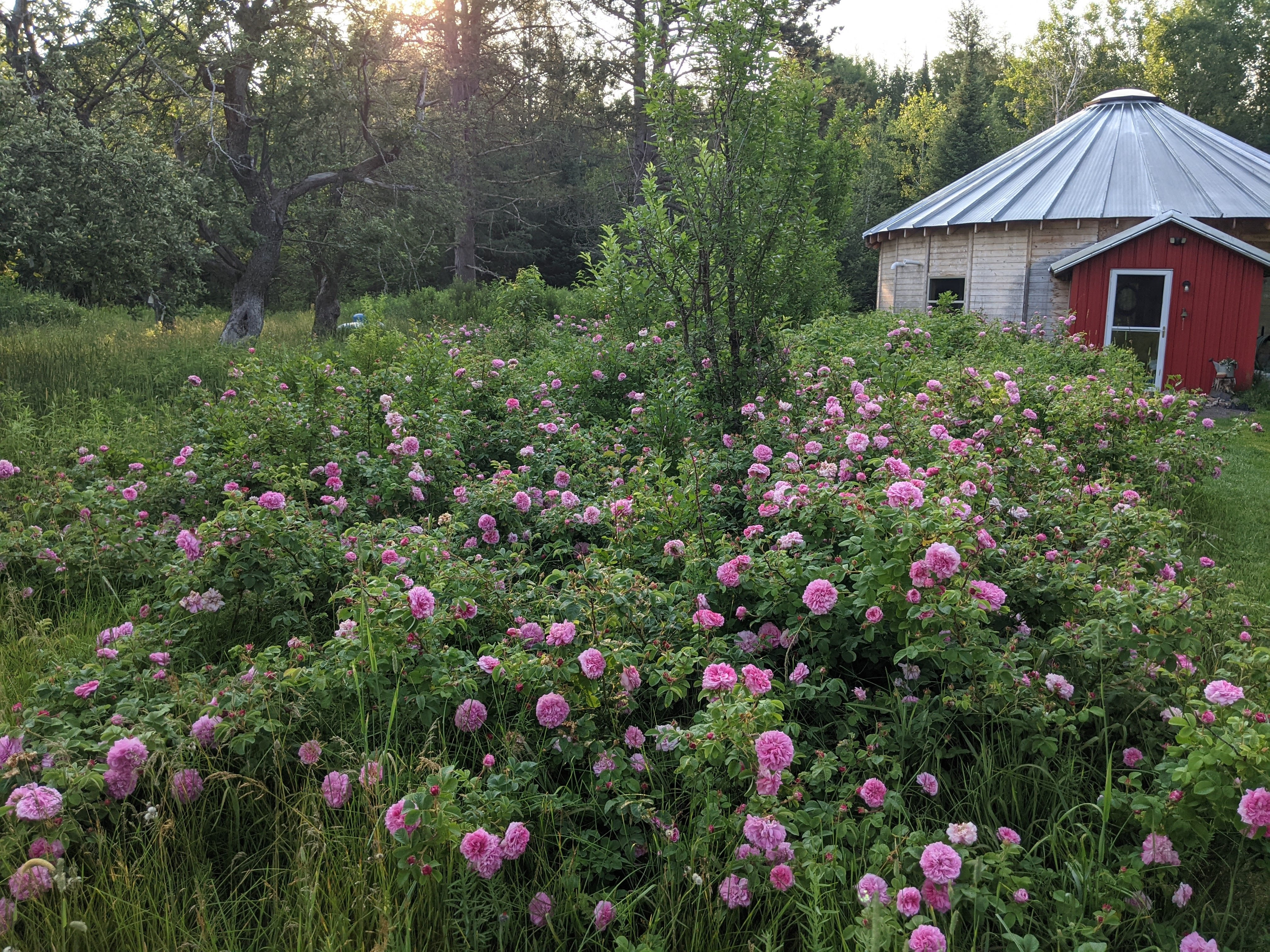
Stopped and smelled the roses.
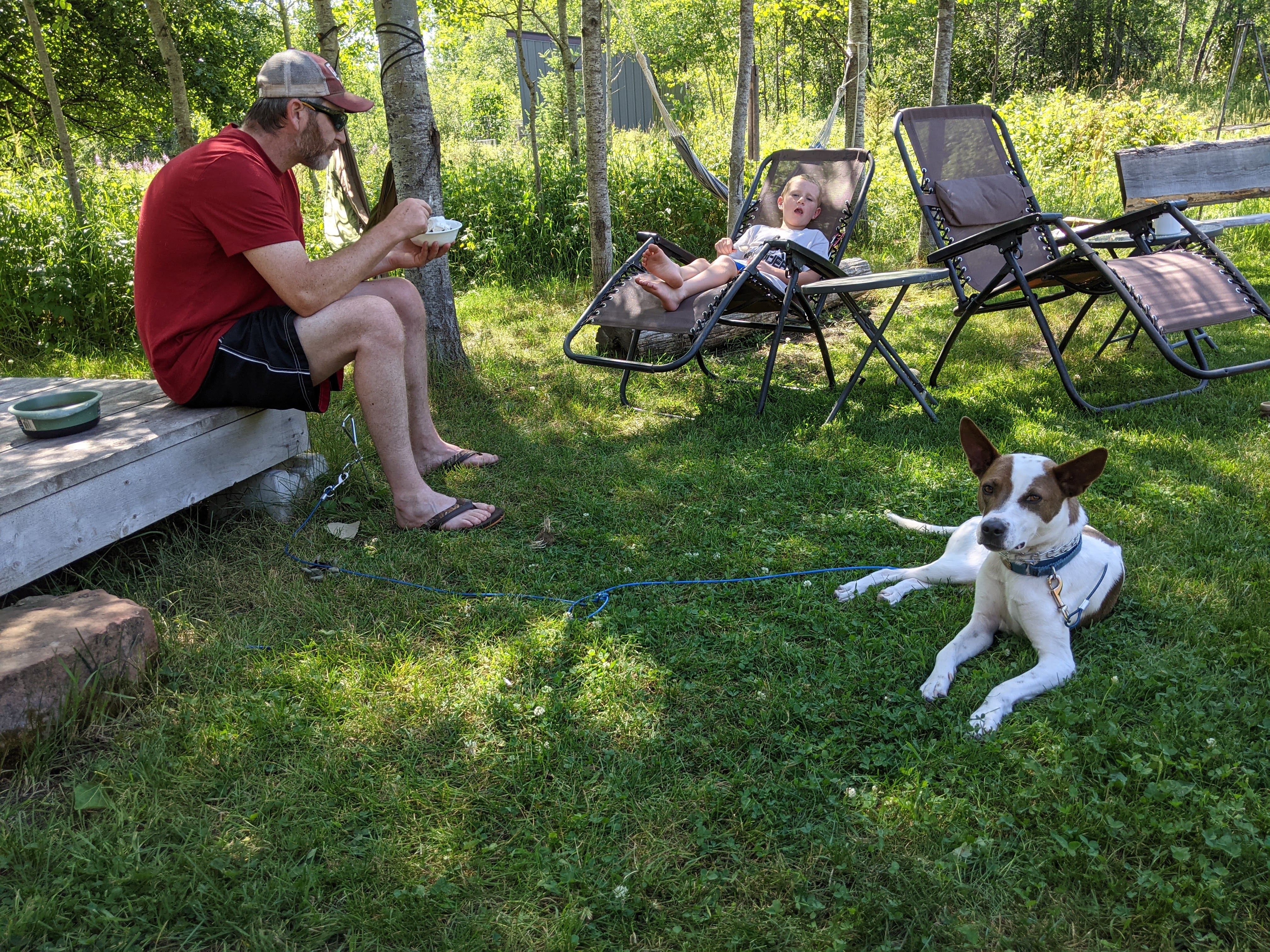
Enjoyed a bowl of ice cream on a hot day. (It’s been way too hot this summer).
Spent time in a hammock, even if it’s just 10 minutes!

We even hosted an afternoon herbal tea party by the roses which was a real delight.

I sincerely hope you find something that brings you joy or presses that reset button daily.

Wishing you peace, love and nature,

-L

A Notion About Seeds

Happy Spring! We’ve been over here in the Northwoods riding the wave of Mother Nature’s moods. The last two days were 60 degrees F and sunny in the Keweenaw and as I’m writing this it’s 34 degrees F and snowing enough to accumulate. This time of year really reminds me of how adaptable and flexible we need to be. We can learn this lesson from nature. The migrating birds are either here or moving through, the trees are just starting to leaf out, the daffodils are just about to open and then…..SNOW. Yet, in most cases they just keep right along or making slight adaptations to manage through it. I’m doing a similar thing today. I had outside plans, but this weather and my plans didn’t mix. I made a few changes and now I’m on the couch with a cozy blanket and cup of tea. That’s flexibility, right? 😉

One of my outdoor plans today was to pull the overwintered parsnips and carrots out of the garden. It is such a treat enjoy fresh in April what was planted in summer last year. Fresh is so very appreciated this time of year – from that harvested from last year’s planted, along with fresh greens from seeds recently sown in the High Tunnel.

Fresh Kale picked from the high tunnel!

As a gardener and reader, I come across different sayings and quotes that have the tune of gardening, but carry deeper meaning, as interpreted by the reader. Here’s one of those quotes by a wise unknown.

“The day you plant the seed, is not the day you eat the fruit.”

Unknown.

We’ve recently been planting a lot of seeds, along with harvesting the fruit (or roots in the case of carrots and parsnip), so I get this quote. It’s literal. But, it really gets me thinking about it metaphorically as well. This summer we’ll be celebrating our 4th year as permanent, full-time residents of White Sky Woods, but we started planting the “seeds” long before making this major move to homesteading and yurt life. Maybe the “seeds” were little ideas of what our homestead could be like, or maybe a “seed” was a purchase that allowed us to achieve something more, like fencing the garden so our real seeds could safely grow.

Sometimes we plant “seeds” in the form of positive ideas that we don’t even know will grow. Maybe the “seed” is an idea that you’re passionate about and you do everything to grow the “seed” by learning, practicing, dreaming, and doing. All these efforts help the “seed” grow, but depending on what is meant to be, it may or may not be productive enough to ever pick the “fruit”.

Maybe you plant a “seed” as just a passing thought and it magically grows on its own without much input and then suddenly there is “fruit” and you feel grateful. These “fruits” are surprising and sometimes even go unnoticed because the “seed” was such a passing thought.

Maybe in another case the “seed” you plant is an idea that is critical, damaging, or negative. We can grow these seeds too, and these kinds typically have “fruit” that is more akin to thorns. For some of us, these are the easiest “seeds” to grow, but I’d say that for all of us, the least welcome “fruit.”

Everyday as a family we take time at dinner to say what we are grateful for. It’s such a positive practice. Sometimes we have small things, and sometimes big ones. But, it’s great practice to make note of what “seeds” we are planting and what “fruits” have grown.

What “seeds” are you planting? What “fruit” will they or have they grown? I’d love to hear!

Steering in New Directions

Just as the weather and seasons change and can be unpredictable, so sometimes are things here on the homestead. In the past 3.5 years, we’ve seen a lot of changes! As newbie homesteaders since 2017, we’ve been enjoying and exploring various opportunities that homesteading offers. For instance, in year one we bought 2 pigs, bred them, and then raised and sold their young in year two. In that time we learned to castrate piglets and raise them on rotational grazing on pasture. We learned how to butcher a young pig, inseminate a sow (although unsuccessful) and then butchered a 615# sow on our own. We could never had predicted any of that journey, but we did give it all of our heart and soul. There were ups and downs and I don’t regret any of it. We learned what we think we would or wouldn’t do again and we’re open-minded to the idea that overtime, that could change.

Two years ago we decided to explore another opportunity, working with young calves to train them to oxen to have working draft animals here. We brought home Nels and Wiit and raised them from calves. We trained them for work. They learned commands like come up, woah, gi, and haw. They went on daily walks, they grazed the pastures all summer long. They learned to pull, and boy did the kids love getting sled rides down the road.

Early Winter 2019, Tim takes Wiit and Nels on a training walk – pulling our kids and a friend in the sled!

In year two we had a few road blocks to training. Both Tim and I had injuries which made handling large animals challenging. Also, renovating the cabin and managing a growing garden and high tunnel were full time jobs on top of our regular work. Unfortunately this combination of circumstances impacted the amount of work we were able to do with Nels and Wiit. They still had their daily walks to pasture and received plenty of love.

2020 was a tiring year for us. As we came into the new year I spent a lot of time thinking about priorities and simplifying life. Tim had been doing the same. One evening we found ourselves reflecting on our past year and the year ahead, ideas that had been in our minds were vocalized and after taking a week’s time to think about the discussion and options, a hard decision was made. It was time to make some changes to downsize our responsibilities and costs. It was time to take a new direction, away from our original ideas. This includes several changes, with the biggest being choosing not to proceed with training Nels and Wiit for draft and no longer keeping them. When we spoke with some friends about this, they expressed interest in buying for beef. With hearing this, we knew that this hard decision was just made clear. We’d choose good food over the attempt to sell trained young steer in a region where this type of activity is rare. While our vision of draft for Nels and Wiit didn’t come to complete fruition, it was an incredibly enriching two years of time for us and friends who spent time with them, and as it goes for the cows they had a great life. They were cared for holistically and loved and they will provide healthy, tasty food for four local families who will enjoy meat raised within just five miles of their homes.

With a trailer rented from a friend, we loaded up the cows. We were so nervous they wouldn’t load, but their training really came in handy. With some simple guidance, they went into the trailer with no trouble. They made the trip to the processing facility (we didn’t want to take on this scale of project ourselves) and were easily loaded off. The homestead is already very quiet without their presence, since they always greeted anyone with mooing. As with all our animals, the decision to end a life is never easy. Also with all our animals that end as a meal, we have extreme gratitude for the opportunity to connect with them and have them enrich our lives during their time here and for the nourishment they provide for us after.

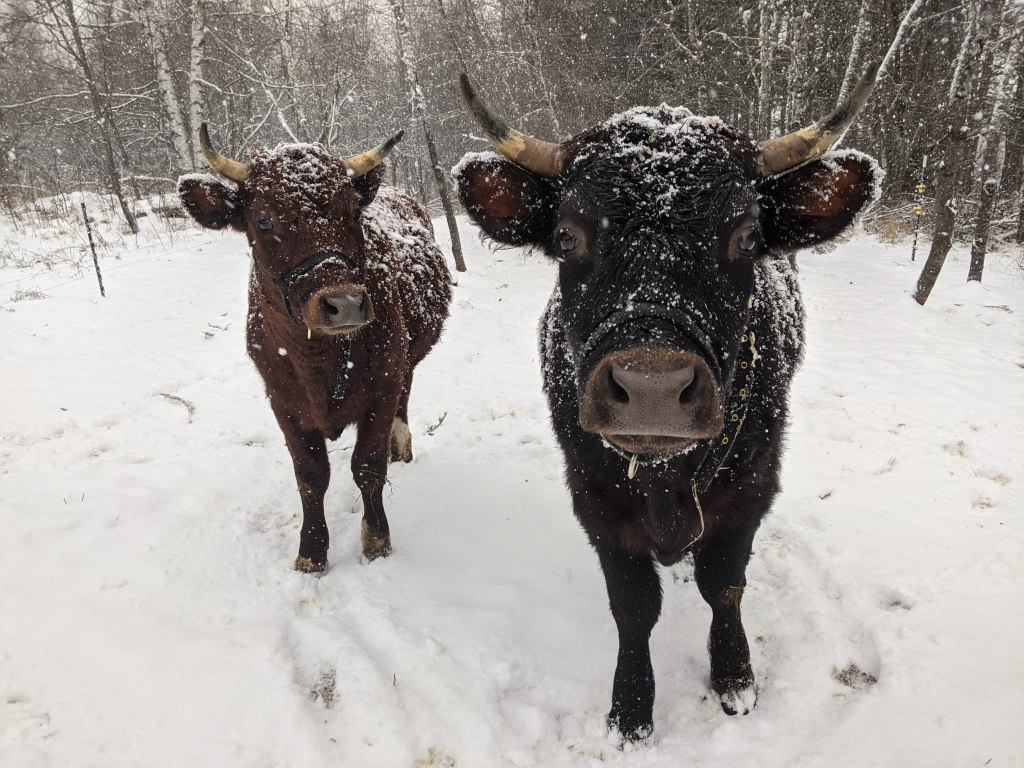
Well fed, but begging for food, early winter 2020.

The homestead feels different now, but we are moving along with thanks in our hearts. We continue to evaluate what’s right for us and where to put our focus. We will always be learning and doing, adapting and changing. Sometimes this leads to tears and sometimes to joy and we’ll live it to the fullest. Life is good.

It’s seed starting time so the smell of dirt is in the air! Also, we’re wrapping up all the rehab and remodeling work on the vacation rental cabin and getting ready to list it for booking! Stay in touch on Instagram and Facebook for a sneak peek of it all!

Wishing you abundant peace, love and nature,

-L

Absence Makes the Heart Grow Fonder

In Summer of 2020, we had our 3 year anniversary of full-time residence and homesteading at White Sky Woods! We usually have a celebration, inviting friends, sharing food around the bonfire, but we didn’t do that this year – you know, pandemic. It’s hard to believe it’s been 3 years already … It’s hard to believe it’s only been 3 years! As with most things in life, the longer you do something, the more likely you recognize trends. Things become more predictable year to year. The homestead also brings some predictability of sentiments, such as the one that titles the blog.

Early snow, mid-October 2020

As a homesteader, the majority of the heavy work we do takes place April – October. Everything revolves around the outdoor work and the garden: planting, growing, harvesting, putting up the food. It takes a lot of care and effort to manage a garden that supplies our food for a year for us plus a touch more for what we grow for the farm stand. I love the work! I love being active and connecting with the land. Doing all the work means bringing my family and community healthy food. That’s one reason we made the life transition from rat race to homesteading.

By the time August rolls around, I’m starting to feel generally overwhelmed. This past summer there was a lot of work done to build more of the foundation for our business, and the workload was worth it, but intense. By August, it feels like everything is a rush, balancing work and play becomes nearly impossible, it can be tiring and overwhelming. This is when I start to daydream about a slower pace: reading books, spending casual time with friends, focusing on work I’ve been putting off, getting back to things I enjoy that summer doesn’t afford time for, and traveling beyond the homestead. In its absence, all these things grow fonder in my mind.

Then comes October, and the panic really sets in. Will everything be prepped for winter, before the snow hits? Do we have enough food? How about firewood? This year I had in my mind that our major outdoor work would be wrapped up by November 1st, and I’d gracefully slide right into our calmer winter months. Something a little different happened. We started getting snow in mid-October and in my mind I surrendered to the fact not everything was getting done as planned. Then by early November it turned back to summer (it was 70 degrees this week – crazy!). These little flukes require flexibility. Nothing on the homestead is graceful.

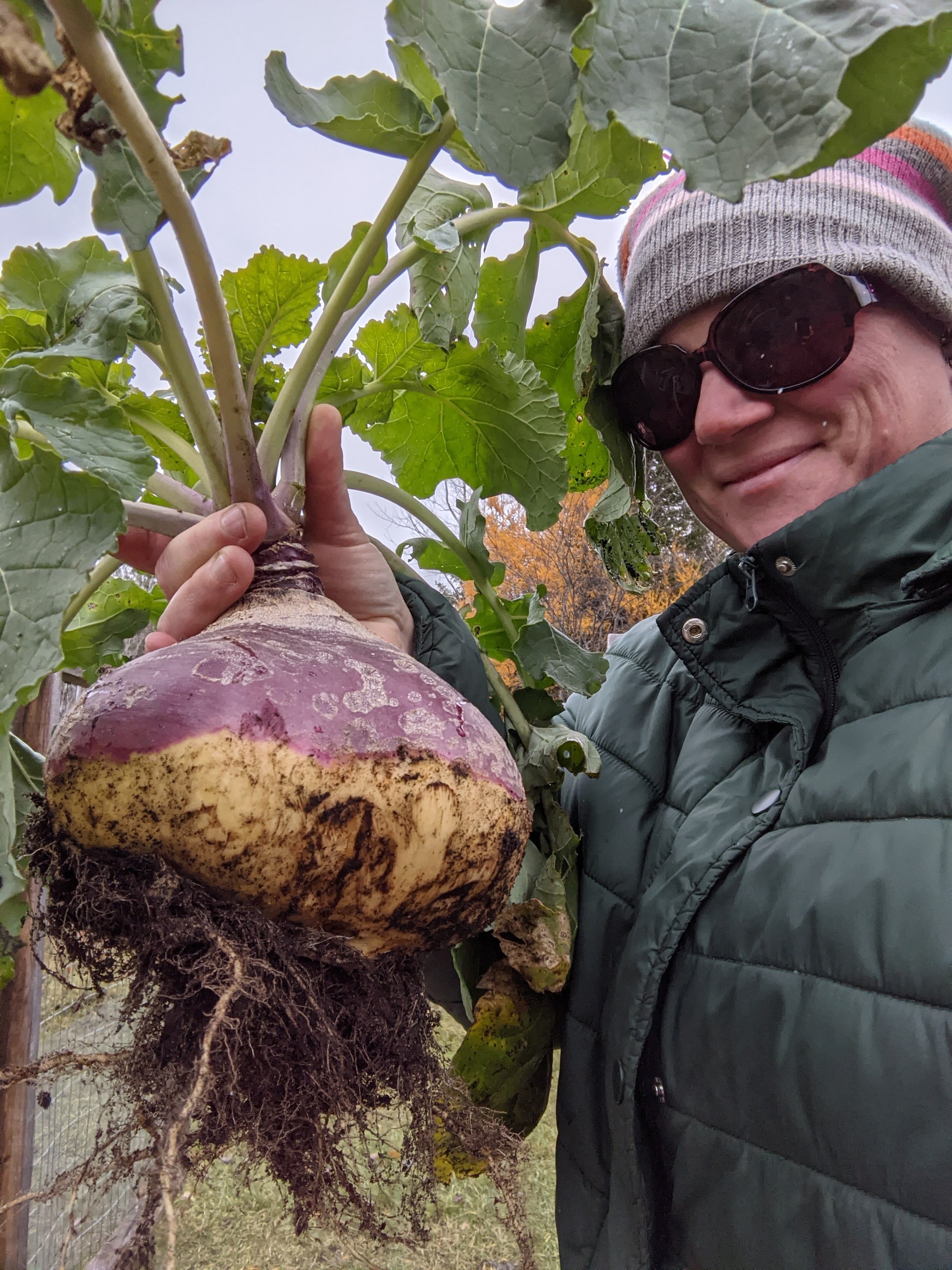
Last minute harvesting before the snow comes. Rutabaga!

Once winter sets in, the pace changes. There are still chores, homeschooling, community volunteering, employment and other regular responsibilities but the light of the days are short and the dark nights are long. We spend as much time enjoying the daylight as possible – snowshoeing, kids playing outside, and training time with our two young steer. There is more time to focus inward as well as spending extra time catching up on reading, handiwork, personal education, and generally time to do whatever ever sparks our interest. It’s really nice compared to the summer’s demands. It’s the break I yearn for during the end of summer when I’m overwhelmed and just plain tired.

By January we are ordering seeds. In February we shift to thinking more about summer projects and garden planning. By March we’re starting seeds inside (although all of this will probably look different in 2021 since we have the high tunnel to grow in, yay!). Suddenly, we feel an absence of summer and our heart grows fonder for those sunny days in the garden and we are eager for winter to be over so we can get to work outside.

Is it the human way to yearn for something we have absence of? I think most homesteaders who love what they do would agree, the work is great, but the rest is necessary. And once we’ve had the rest, we get antsy and ready to get back to the work. In this lifestyle, absence truly does make the heart grow fonder and is part of the work/rest cycle.

I recently attended the Women, Food, and Agriculture Network 2020 Virtual Conference and it was invigorating. Being held in November, it was reassuring to have conversations with other women who are experiencing end of season burnout. I took several sessions about how to support my well-being (something I generally suck at). Engaging in the conference was a form of self-care. I decided the best way for me to focus on the Virtual Conference was to do a little get-away to a place where I wouldn’t be distracted by my normal responsibilities. I’m grateful my family supported me in this. The conference was a great way to help me shift from end-of-season to off-season.

I know that in a few months I’ll be eager to have back the hard-working summer months, but until then I look forward to focusing on what is here, now, and creating new habits to help prevent burnout next summer.

Catch us on social: Instagram and Facebook.